How does the system work?
A face recognition system first finds a face in the camera image, then converts it into a digital signature: a set of numbers describing the features of that face. At the entrance, the new signature is compared with the signatures in the database; if there is a match, the door opens or attendance is recorded.
An important point: the comparison runs on these digital signatures, not on photos. That makes it faster and reduces the amount of data stored.
Enrolment takes a few seconds
In our system, adding a new employee takes about 15 seconds: the person turns their head slightly to the right and left in front of the camera, and the system memorises the face from several angles. No separate photo shoot or special equipment is needed.
More on what the system can do: artificial intelligence and face recognition solutions.
Where it is used
- Office and site access: instead of cards and keys.
- Employee attendance: arrival and departure times are recorded automatically.
- VIP and guest entry at events: the guest list is checked without creating a queue.
- Security: control over entry by unauthorised people.
Where is the data stored?
Face data is personal data and requires special care. That is why our system runs on the company's own server (on-premise): the data is not sent to an external cloud and does not leave the company. And because the system runs fast even on an ordinary laptop, there is no need to buy an expensive server.
Before rolling it out, also take care of the following:
- Inform employees about the system and obtain their consent.
- Decide who has access to the database and log that access.
- Delete the data of employees who leave, without delay.
- Keep the backup of the database encrypted.
We cover access rights and backups in more detail in our article on the first 10 steps in cybersecurity.
Face recognition brings convenience, but trust depends on how the data is handled.
What does accuracy depend on?
- Lighting. Strong backlight or a dark corridor makes recognition harder. It is better to point the camera in the same direction as the light, not against it.
- Camera position and height. The camera should see the face at roughly eye level, without an angle.
- Enrolment quality. When a face is captured from several angles, the system copes better with glasses, a new hairstyle or a beard.
- Flow. If several people are at the entrance at the same time, the camera's field of view and the door logic must be designed for it.
Protection against spoofing
When choosing a system, be sure to ask: can it be fooled by a photo on a phone screen or a printed photo? This check is called "liveness", and it makes it possible to tell a living person from a picture. For access control it is an essential requirement.
Connecting to existing systems
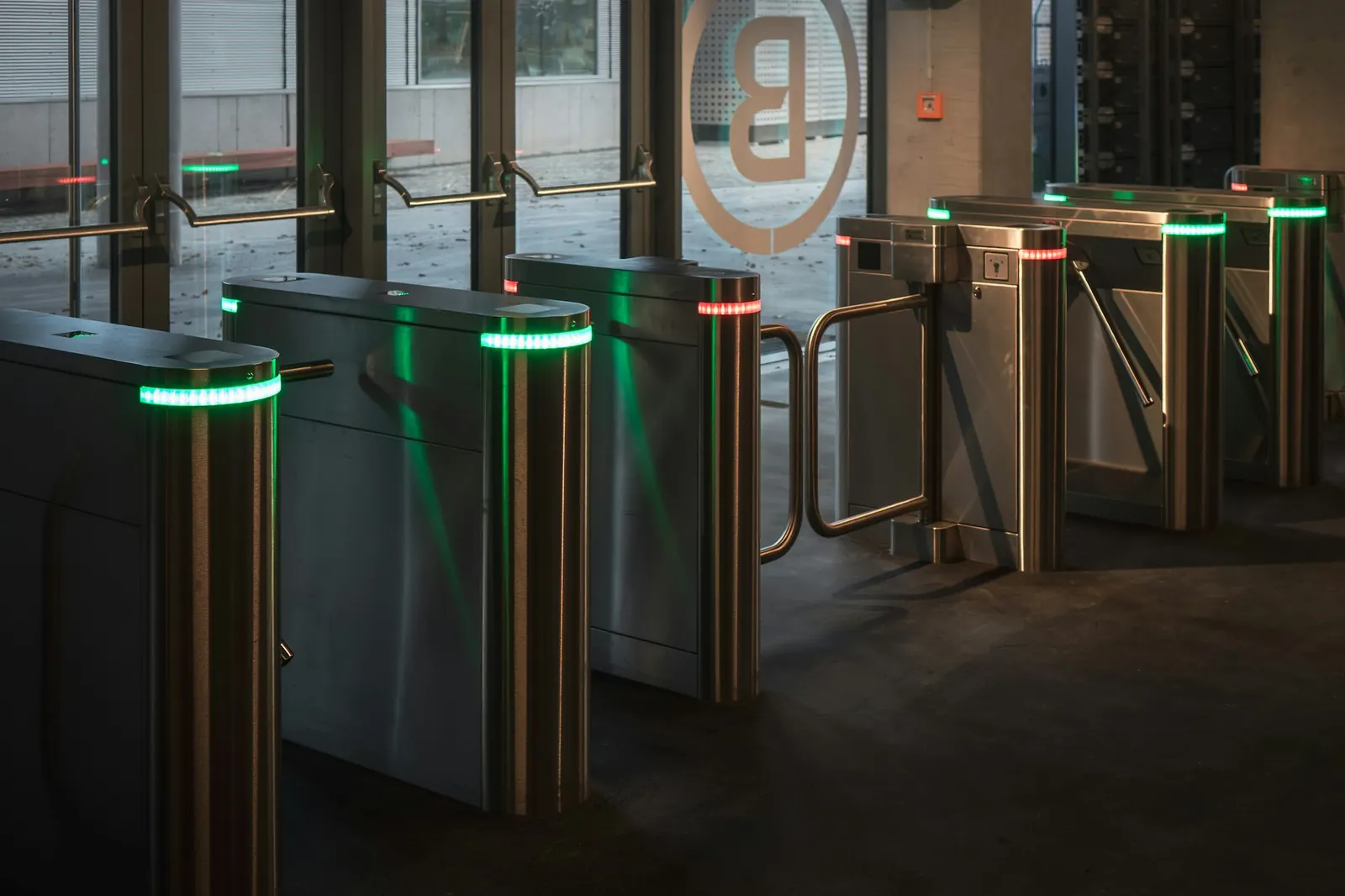
Face recognition does not work in isolation: it is integrated with a turnstile or an electronic lock, with the HR and attendance system, and sometimes with event registration. So before rollout you need to define which systems will receive the data and in what format.
Connecting it to turnstiles, HR and attendance systems is a system integration job.
In short
- The system compares a digital signature of the face, not a photo.
- Enrolment takes about 15 seconds.
- The data stays on the company's own server.
- Consent, access rights and deletion rules should be defined in advance.
Frequently asked questions
What does the accuracy of a face recognition system depend on?
Accuracy depends on lighting, the position and height of the camera, and the quality of enrolment: when a face is captured from several angles, the system copes better with changes in appearance.
Do you need special equipment to set up a face recognition system?
No expensive hardware is required: our system runs fast even on an ordinary laptop. For access control, a camera and a turnstile or an electronic lock are enough.
Is it safe to store face data?
The system compares digital signatures of faces rather than photos, and it runs on the company's own server. To keep the data safe, consent, access rights and data deletion rules should be defined in advance.