
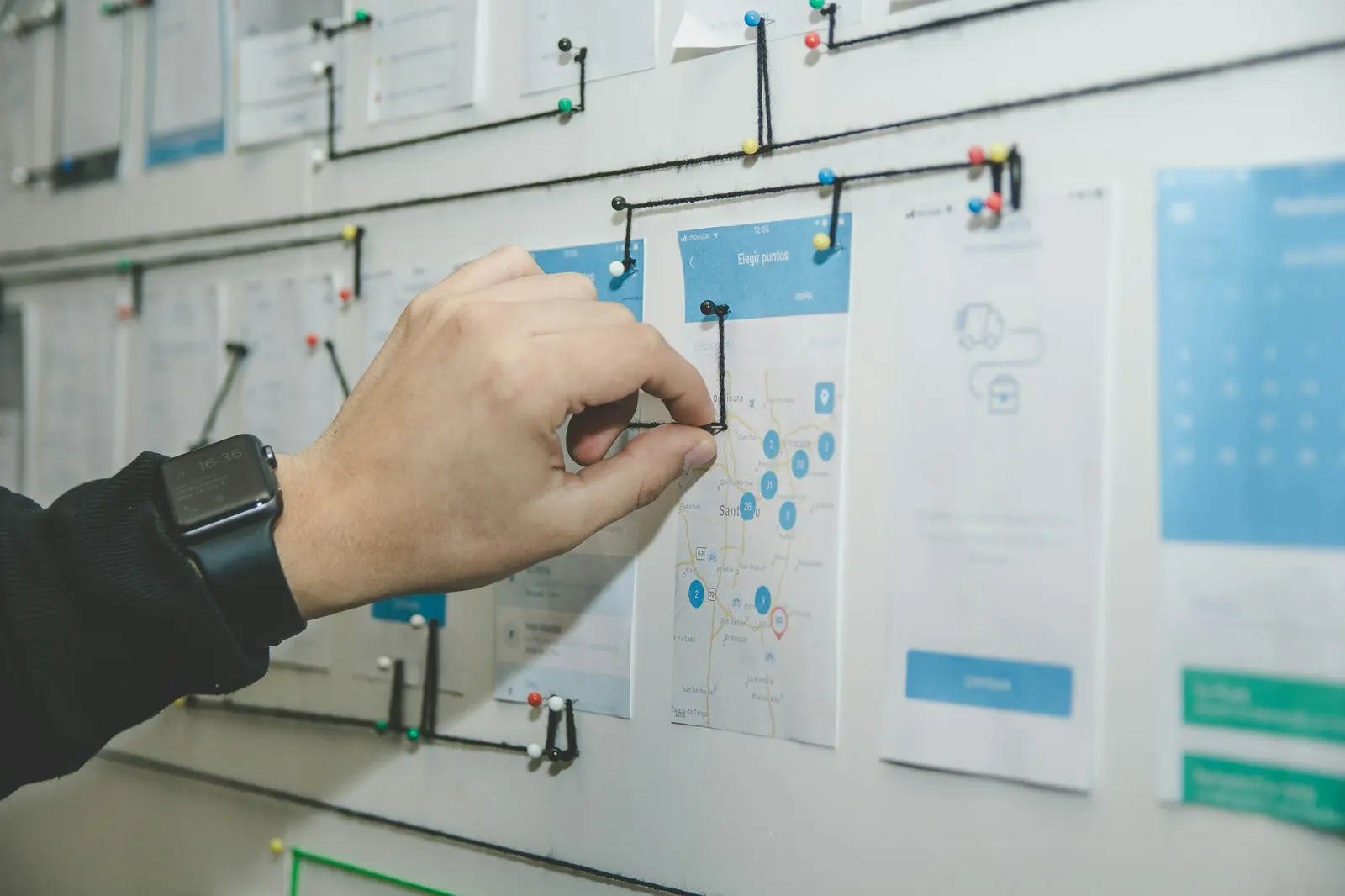
What is an MVP?
An MVP (Minimum Viable Product) is the smallest version of a product that solves the core problem and can be put in front of real users. It is not an unfinished or low-quality product: an MVP has few features, but the ones it has work reliably.
For an online booking system, for example, the MVP lets a customer pick a service and a time and get a confirmation, while the administrator sees every booking in one list. A loyalty programme, complex reports and a mobile app wait for the next stages.
Why not a big system straight away?
- Assumptions go untested. We think we know what is needed; users often take a different path.
- Budget goes to unexpected places. Months are spent on features nobody uses.
- Launch is delayed. Meanwhile a competitor is already winning customers with a simpler product.
- Change gets expensive. Rebuilding a big system later is far harder than extending a small one.
How to choose your MVP
The most useful question is: what is the minimum a user must be able to do to start getting value from the product? We recommend three steps:
- Write down the core scenario. Describe the user's path from start to result in a few sentences.
- Split features into three groups: "must have", "nice to have" and "later". Only the first group goes into the MVP.
- Define the measure of success up front. For example: 100 bookings in the first month, or 30% of orders coming in online.
In a good MVP, every feature gets a "no" to this question: without it, could the user still use the product?
Example: an online booking system
Take a booking system for a beauty salon or a clinic. The idea is simple, but the wish list grows fast. The split could look like this:
| Stage | What's included |
|---|---|
| MVP | Choice of service and specialist, free slots, SMS or email confirmation, a booking list for the administrator |
| Stage 2 | Online payment, reminders, a customer account |
| Stage 3 | Loyalty programme, reports, a mobile app |
Once the MVP is live, it may turn out that customers want reminders more than online payment. In that case the order of stage two changes and the budget goes to the work that matters most.
Common MVP mistakes
- Reading "minimal" as "low quality". There can be few features, but security, speed and usability are not up for compromise.
- Forgetting analytics. If you don't measure what users do, the MVP teaches you nothing.
- Not collecting feedback. Talking to your first users tells you more than any report.
- Stretching the MVP forever. When a new feature is added every week, the first version never ships.
How long does it take?
It depends on the scope of the project, but a well-chosen MVP is usually measured in weeks, not months. If the plan for the first version runs past half a year, it is a sign that there are still too many "nice to have" features on the list.
What happens after the MVP?
Once the first version is live, the real work begins: real usage data is collected, customers give feedback, and the priorities for the next stage are set by facts rather than assumptions.
For this to work, the architecture has to be designed for growth from day one, so that new modules can be added without tearing the system apart. In our experience the most successful projects develop in short cycles: every few weeks a working update, a measurement and the next decision.
This is exactly the approach we take in our custom software projects. If you are planning a mobile product, see our mobile app development page as well.
In short
- An MVP is the smallest working version that solves the core problem.
- Split features into "must have / nice to have / later".
- Define the measure of success before launch.
- Build the architecture ready to grow.
Frequently asked questions
What is an MVP?
An MVP (Minimum Viable Product) is the smallest working version of a product that solves the core problem and can be put in front of real users.
What is the difference between an MVP and a prototype?
A prototype is a mock-up made to demonstrate an idea and is not meant for real use. An MVP is a working product that real users can actually use; it simply has fewer features.
Which features should go into an MVP?
Only the features without which the user cannot complete the core scenario. Everything else is kept for later stages.